
SIGNIFICANCE OF ARUDRA DARISHANAM
- S Subramaniam
- Jan 3
- 5 min read
Updated: Jan 4

Lord Shiva is usually worshipped in three different forms - as Lingam, as the dancing deity - Nataraja and as the eternal teacher - Sri Dakshinamoorthy.

The Nataraja form of the Lord is basically associated with the cosmic dance called thandava. These thandavs are of several types and can be classified broadly into seven categories and are collectively called Sapta Thandavam.

Nataraja is always seen in a dancing posture, with flowing matted hair and lifting his left leg and stamping his right foot on a dwarf sized asura called Apasmara Purusha who represents ignorance. It should be noted that Shiva never attempts to kill / eliminate the asura but is seen only putting his foot on him to subdue him - keeping him alive so as to set the balance between knowledge and ignorance. For, if ignorance is completely vanquished, it will lead to utter chaos.

Nataraja holds damaru representing creativity in one upper hand and fire (agni) referring to destruction in the other upper hand. The two lower hands are in Abhaya hasta mudra and Gaja hasta mudra - signifying liberation and refuge.. The circle enclosing Nataraja is called Prabhamandala.
Nataraja is worshiped specially on the Arudra darshan day in all the Shiva temples in Tamil Nadu and Kerala and the festival falls in the Tamil month Margazhi (Dec-Jan) and on the day the full moon (purnima) and Arudra star come together. Arudra abhishekam is performed in the morning wee hours and the Darshan starts thereafter. For Arudra Abhishekam pournami is important and for Arudra Darshan the star is important.

Five main temples where Arudra Darishanam is celebrated in a grand manner are separately classified as the five ‘Sabhas’. These are the (1) Kanaka (gold) Sabha, (2) Rajata (silver) Sabha (3) Thamira (copper) Sabha (4) Ratna (ruby) Sabha and Chitra (art / painting) Sabha.

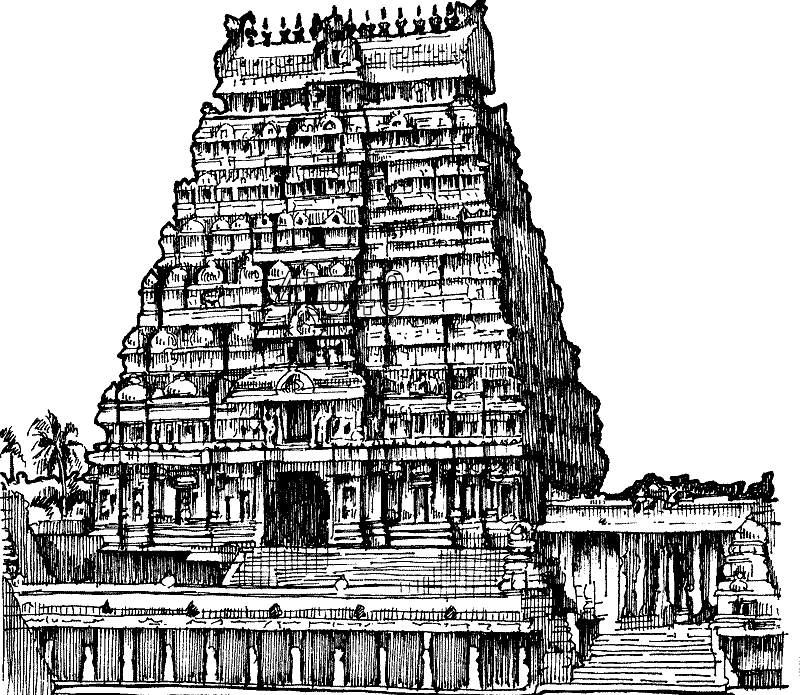
The Kanaka Sabha temple for Nataraja is located in Chidambaram. Here, the lord is depicted in gold form and the dance is referred to as the Ananda Thandavam.
Ananda Thandavam is a vigorous, joyful dance and can be called the Dance of Bliss and signifies the universe’s continuous existence.

The Rajata Sabha is located inside the famous Meenakshi temple in Madurai. The lord is depicted in silver form and the dance is called Sandhya Thandavam. Sandhya Thandavam represents the twilight, the juncture of light and darkness. knowledge and ignorance
Madurai temple is an exception where the lord is seen resting his left foot (instead of the right) on the asura. The story is associated with the Tamil king Rajasekara Pandiyan on whose request the lord is believed to have shifted his stance. The episode is referred to as Kaal maari aadiya padalam.

The famous Nellaiappar temple in Tirunelveli is the home for Thamira Sabha where Nataraja is depicted in Copper form. It may be noted that the river on the banks of which Tirunelveli is located is also referred to as Thamirabarani. The Thandavam performed by the lord at Tirunelveli is called Muni Thandavam. It is a fierce form of dance associated with destruction. The Muni may refer to either Patanjali or Thandu Muni.

We now move on to the Ratna Sabha and the temple is located in Thiruvalagadu or the sacred Banyan jungle. The Sanskrit name of the temple town / lord is Vata Aranya Eshwar. The shrine is associated with Lord Nataraja’s Urdhva Thandava where he lifts his right leg skywards. It is believed that during a dance competition with Devi Kali, Shiva’s earring fell on the ground and without stopping dance, the lord lifted the earring with his toe and put it back in its position. In the process the lord lifted his leg skywards and the stance is referred to as the Urdhva Thandava. Devi Kali didn't imitate this pose and accepted her defeat. That's why she is given the first preference at this temple.

The fifth Sabha is an unique one in the sense it is not connected with any metal or gem stone but to art / painting. The temple has two rings, the inner and the outer, containing some spectacular paintings subject varying from the Shiva Purana, Ramayana and Mahabharata. The dance of the Lord associated with this temple is Thripura Thadavam signifying Victory, destruction of evil as well as ignorance.
Offering of Kali and Thalagam to the Lord on the day of Arudra Darishanam
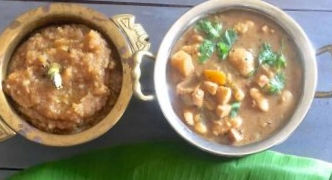
It is customary to offer a sweet dish called Kali made of rice, dal and jaggery and a dish called Thalagam made of seven or nine vegetables.
The practice of offering Kali and Thalagam to Lord Shiva on Arudra Darishanam i Day started some 1500 years ago. Legend has it that a poor wood-cutter by name Chendanar was an ardent devotee of Shiva and used to eat only after offering it to a Sivanadiyar.

One day it rained heavily and he could not move out of his house for work. He prepared a sweet dish (Kali) from the leftover Millets and jaggery he had and waited for a Sivanadiyar but much to his agony no one turned up. Late in the evening Lord Shiva appeared in disguise and ate the Kali the poor wood-cutter offered and also got some Kali packed. Next day the priests at Chidambaram temple found Kali strewn all over the place and informed the king.

Lord had appeared in the dream of the king and had informed about the incident. The king sent his soldiers to look for the woodcutter who was located and later rewarded by the king. From then on, the practice of offering Kali to the Lord on Arudra Darishanam day started.
Author’s Note
The author of this article wishes to conclude the write-up with a verse (hymn) composed in Tamil on Lord Nataraja followed by its English interpretation.
ஆருத்ரா தரிசனம்
அறிவாய் மறையாய் சிலையாய்
நீ நின்றாய் எட்டடியாய்
விரைவாய் வருவாய் நிறைவாய் உறைவாய் என்தன்உளமதினில்
சுடராய் ஒளியாய் மிளிர்வாய்
போக்குவாய் காரிருள் முழுதும்
குருவாய் அமர்வாய் கனிவாய்
ஓதுவாய் தத்துவத்தினை
மிகையாய் தருவாய் அருள்வாய் தாயாய் பொறுப்பாய் என்தன் தவறனைத்தும்
நீயன்றோ தந்தாய் திருவாய் பெருமையாய் பாடினேன் பதிகம் நுனை துதித்து
ஆடல் நாயகன் அம்பலவாணன்
போற்றி
திருச் சிற்றம்பலம் திருத்தாள் போற்றி
English interpretation
ARUDRA DARISHABAM
O Lord ! Standing like an eight feet tall statue, you are the wisdom, you are the essence of all the four vedas
0 Lord! Please come, come fast to occupy my mind and stay there permanently
O Lord ! Glow like the bright light, glow like the wick and remove completely from my mind all the darkness (ignorance)
O Lord ! Be seated, seated like a teacher, educate me, teach me the essence of knowledge / wisdom
O Lord! Give me plenty of your blessings, your benevolence and pardon me for all the mistakes (sins) I do, like the way a mother pardon her child.
O Lord! It is you who have me this mouth and voice, let me sing a few hymns in praise of you
O Lord ! You are the ruler of the art of dance, you are the resident of temples, I pray at your feet, I Lord of the auspicious Chidambaram temple.
Om Namah Shivay Shivay Namah Om


Comments